What are Struvite Stones?1
Struvite stones, also known as infection stones, are most common in people who are susceptible to urinary tract infections (UTIs). The most common bacterial organism that leads to infection stones is Proteus mirabilis; however, other bacteria can also be involved.
Who is At Risk for Struvite Stones?2
There are many different types of patients who may be at risk for struvite stones. These may include people with spinal cord injury (SCI), who can be at risk for both infection and metabolic stones; the elderly; people with diabetes; premature infants or infants with congenital urinary tract malformation; and patients with urinary stasis as a result of urinary tract obstruction, urinary diversion or neurologic disorders.
Lithostat as Adjunctive Therapy3,4
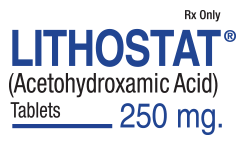
Lithostat (acetohydroxamic acid), also called AHA, is indicated as an adjunct to antimicrobial therapy in patients with chronic urea-splitting urinary infection. Lithostat decreases urinary ammonia and alkalinity in order to enhance the effectiveness of antimicrobial agents and allow an increased cure rate of infection stones. Lithostat facilitates successful antibiotic treatment of urea-splitting Proteus infections after surgical removal of infection stones not cured by three months of therapy with antibiotics alone, and reduces the risk of stone growth in patients who were not candidates for surgical removal of struvite stones.References:
- Griffith DP. Kidney International. 1978;13:372-382.
- Pearle MS, Lotan Y. Urinary Lithiasis: Etiology, Epidemiology, and Pathogenesis. In: Wein AJ, Kavoussi LR, Novick AC, et al. Campbell-Walsh Urology. 9th ed. Philadelphia, PA: W.B. Saunders Company; 2007.
- Lithostat [package insert]. San Antonio, TX: Mission Pharmacal.
- Griffith DP, Moscowitz PA, Carlton CE. J Urol. 1979;121:711-715.